Our CO₂ budget will run out in 2030. Developments such as timber construction help, but to meet the Paris targets, we need to look more broadly. The biggest material implications lie in the connection between building and area design.
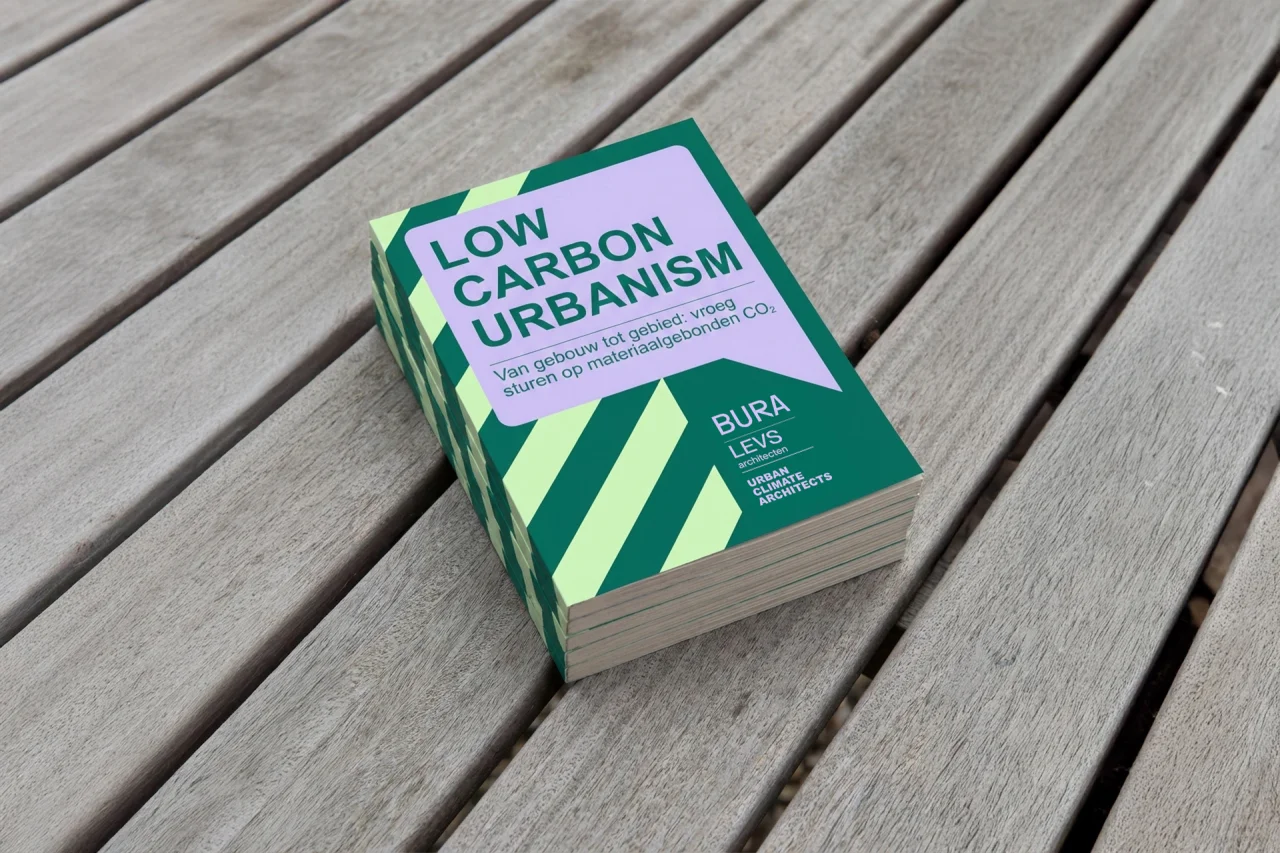
Together with BURA and Urban Climate Architects , we present Low Carbon Urbanism. A study on embodied carbon in seven Dutch area typologies: from Vinex-areas to compact neighbourhoods. We calculated the embodied CO₂ of not just housing, but also infrastructure, public space, and soil. The differences are significant.
We demonstrate that emissions are related to finding a balance between density and height. An FSI between 1.5 and 2.5 with medium-rise buildings yields optimal results. It also appears that biobased materials have a significant impact at the building level, but infrastructure, public space, and soil largely remain fossil-based.
This research provides concrete tools to use CO₂ as a design parameter from phase one. The message: it is and-and, not either-or.
Download the booklet for free via the page below.