Book publication
Low Carbon Urbanism
Book publication
About the study
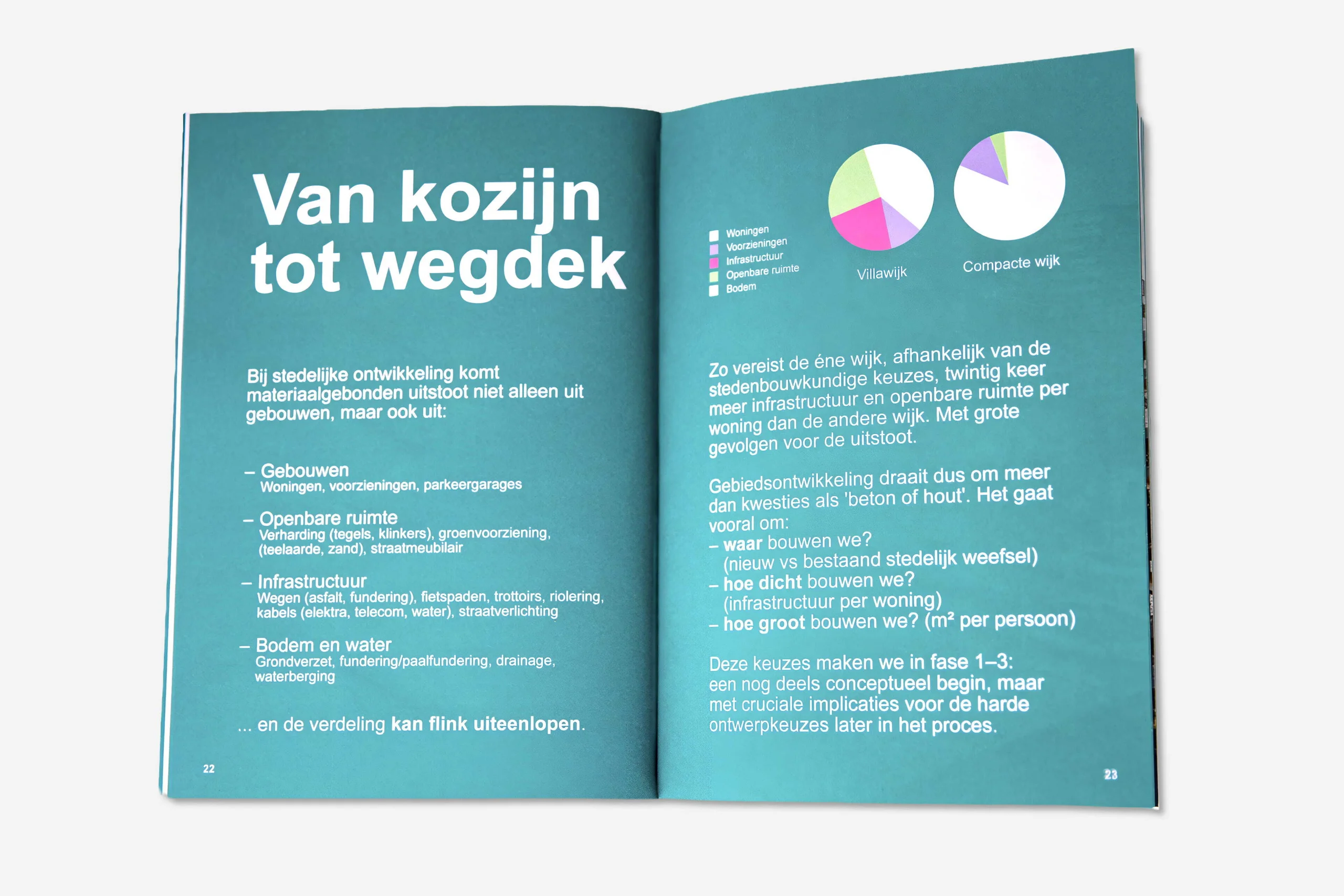
Low Carbon Urbanism reveals the broad impact of embodied carbon on a large scale: from buildings to areas. By analysing seven area typologies, we demonstrate where gains can be made: from density to mobility, from public space to soil. This research by BURA, LEVS architecten en Urban Climate Architects offers concrete tools for designing within the CO₂ budget from phase one onwards.
Embodied vs. operational carbon
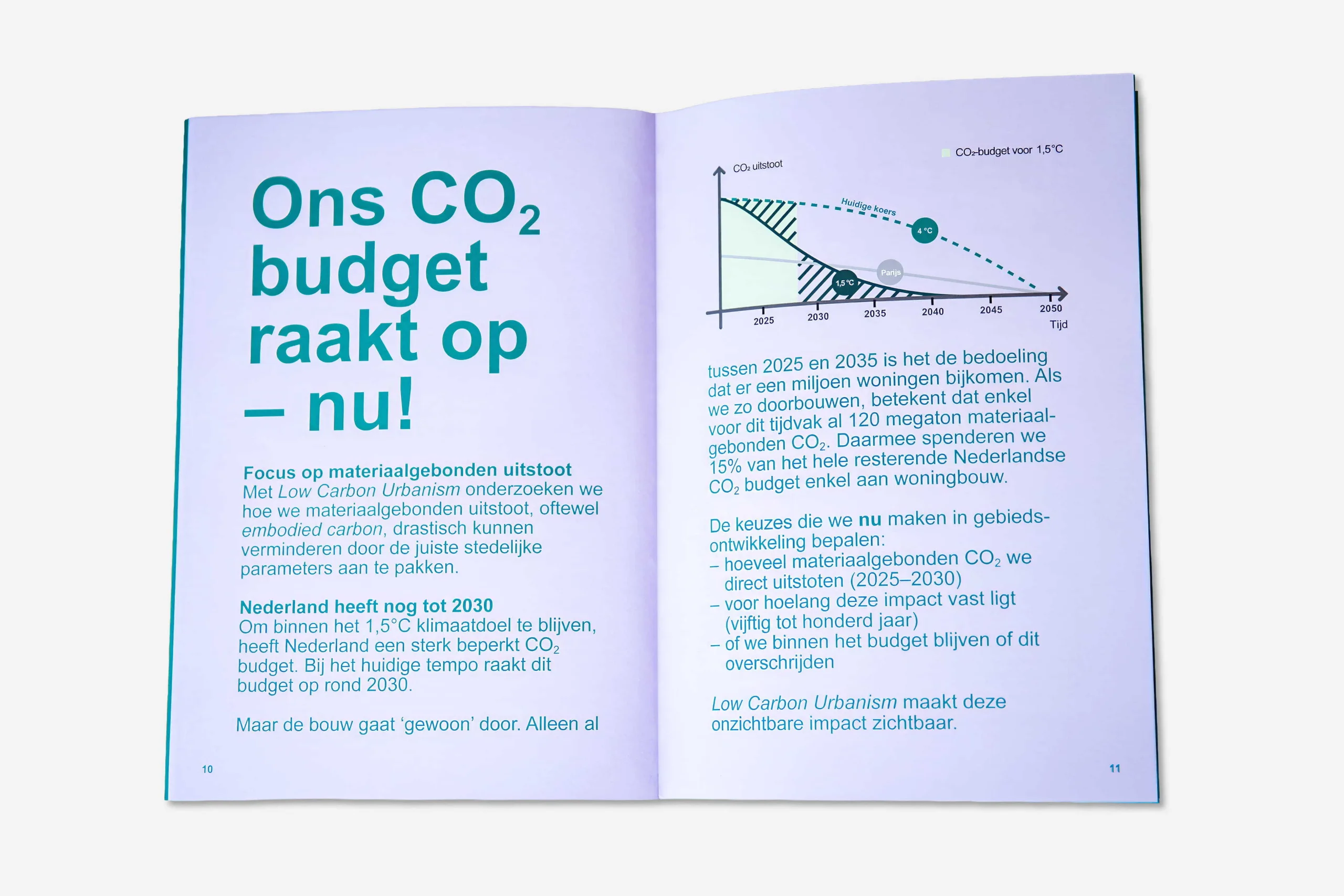
Why are we focusing primarily on embodied emissions in this study? The ratio has shifted. We used to think that operational carbon accounted for 70% of the impact and embodied carbon for 30%. But the CO₂ budget is running out, and material-related emissions in the earliest urban development phases are the biggest challenge that designers can directly tackle, and for which there are no obvious trends yet.
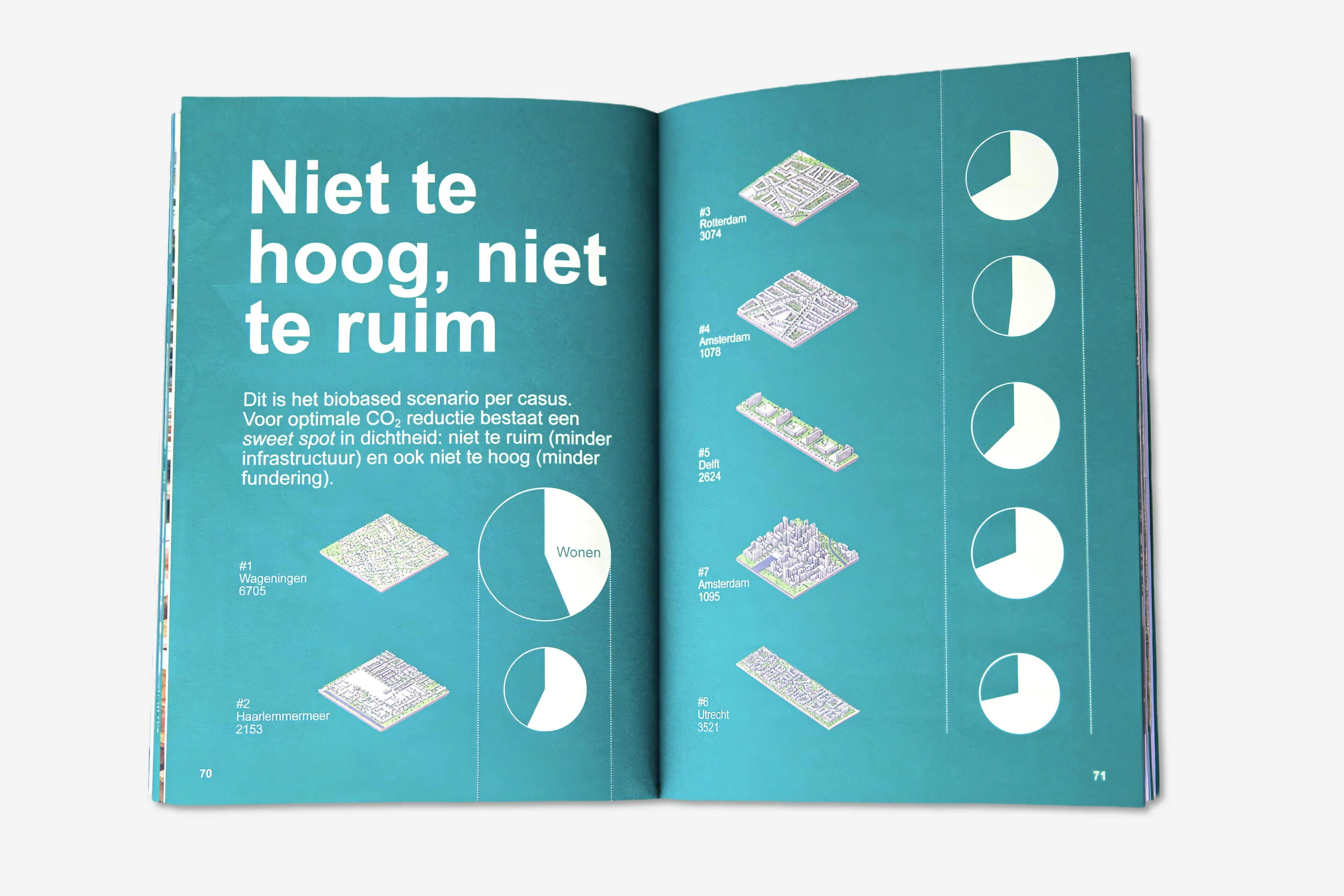
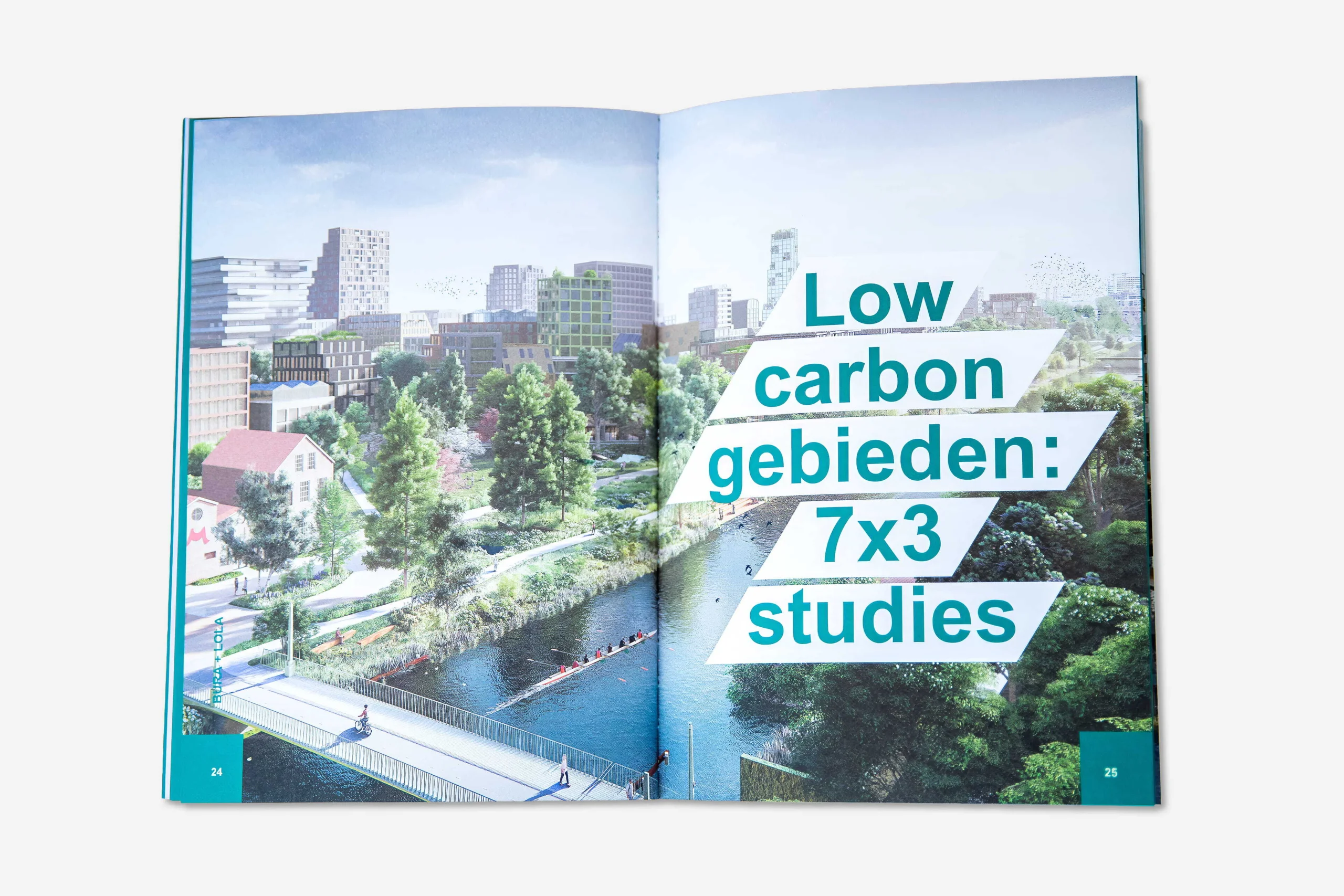
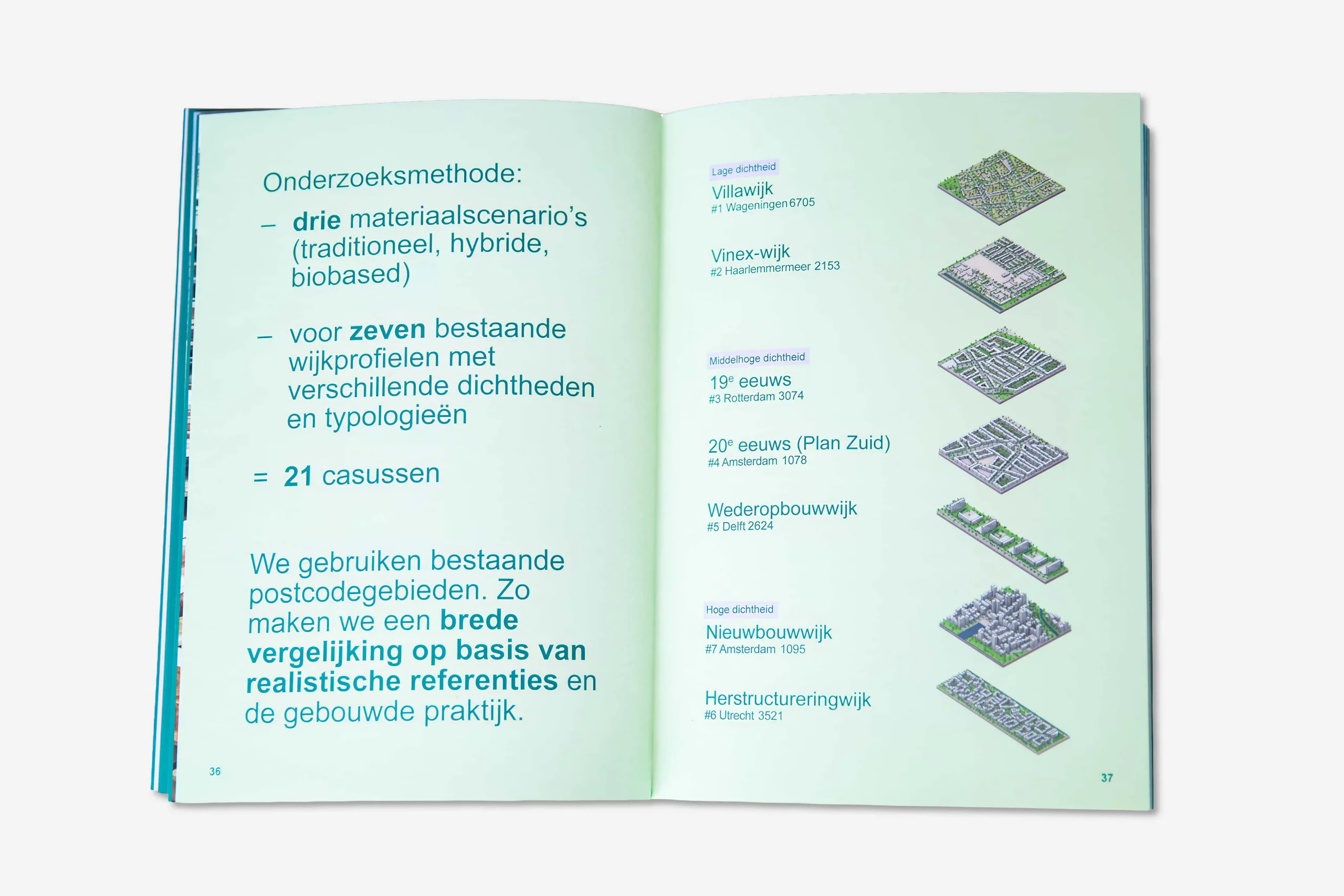
We analysed seven existing Dutch neighbourhood typologies: from Vinex-neighbourhoods to new, compact neighbourhoods. For each area type, we calculated the embodied CO₂ of homes, infrastructure, public space and soil. The differences are enormous. In this study, we show why one area typology yields better results than another.
Main insights
This study shows that emissions are linked to finding a balance between density and height. Biobased materials have a significant impact at the building level, but infrastructure, public space and soil often remain largely fossil-based. Making buildings more sustainable does not solve the problem at the area level.
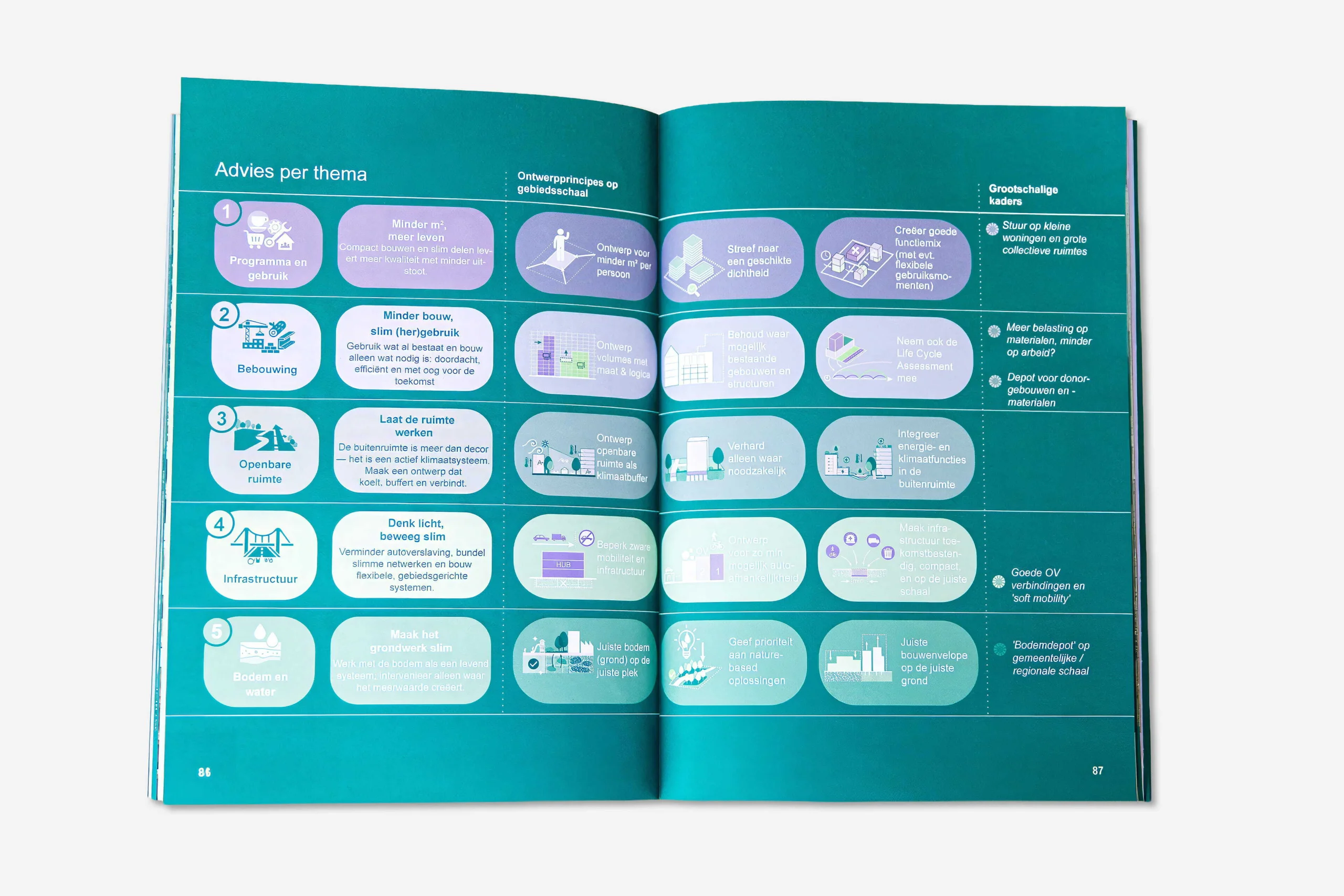
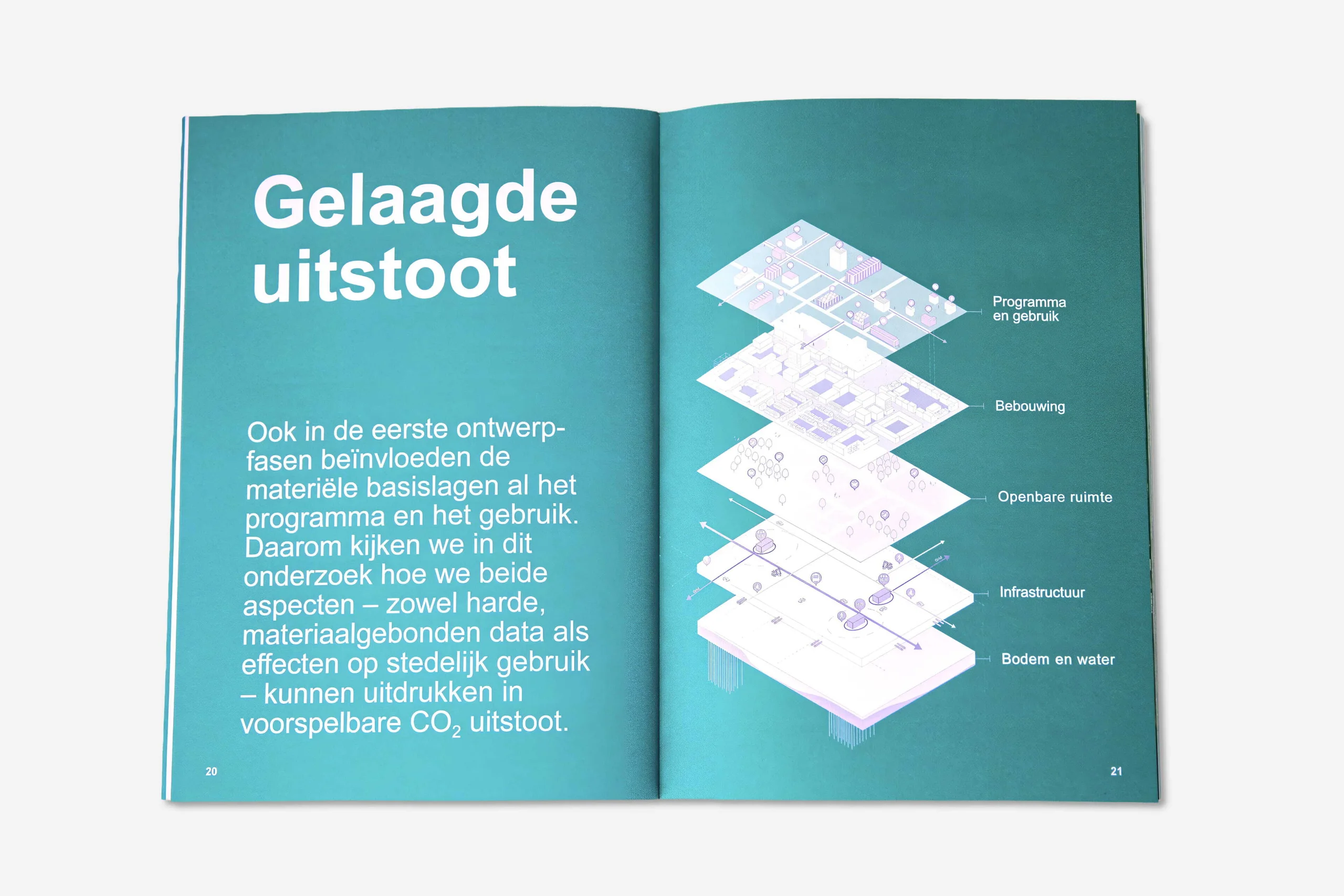
We provide tools for using CO₂ as a design parameter from different perspectives: programme, buildings, public space, infrastructure, soil, and water. The most important underlying message is: do not use CO₂ in a single domain, but ensure measures are taken in all areas. It is “and-and”, not “either-or”.